Tata Mumbai Marathon course guide: Peddar Road twice, the Sea Link and the humidity
The Tata Mumbai Marathon course kilometre by kilometre: where Peddar Road climbs, twice, and the time its hills and January humidity add at your pace.
· 5 min read · EnduranceLabs
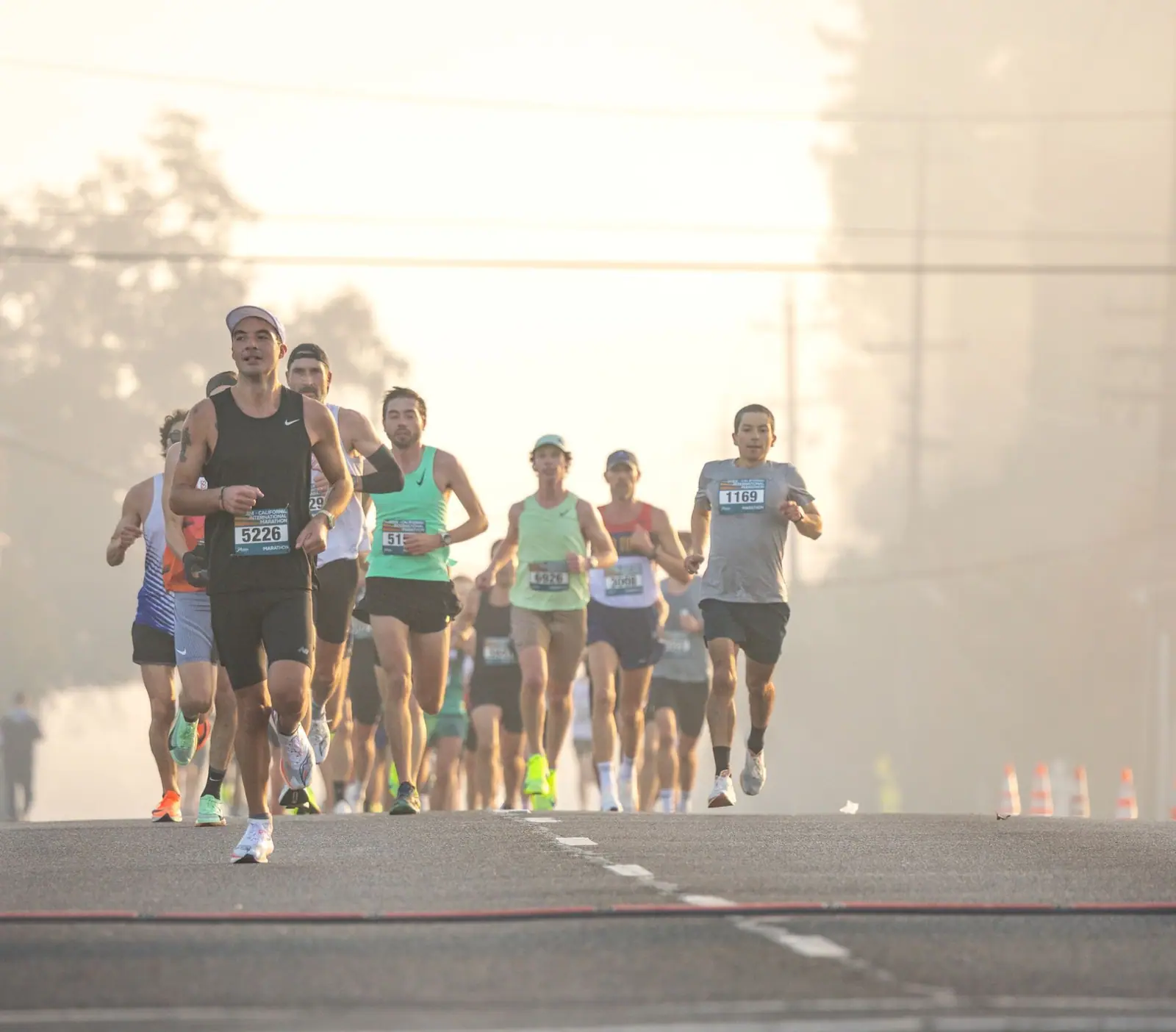
On paper the Tata Mumbai Marathon is flat: a loop of sea roads, a bridge and city streets that tops out about 40 metres above the sea. On race morning you climb Peddar Road twice, the second time at kilometre 37, in January air that is warm and humid before sunrise.
We measured the course from a barometric-watch recording of the 2026 route, checked ten years of race-morning weather, and worked out what the two cost at your pace.
The course at a glance
- Start: outside Chhatrapati Shivaji Maharaj Terminus (CSMT). Finish: Azad Maidan.
- Distance: 42.2 km, one loop out to Worli and back.
- Climbing: about 141 m up and 144 m down, most of it on Peddar Road's two short climbs and the ramps of the Coastal Road and the Sea Link.
- Weather: on an average January race morning, 21 °C and 73 % humidity between 5:00 and 9:30, with a light breeze of about 8 km/h (2016–2025).
- In 2026: the start line closed at 5:30 am and the time limit was seven hours, with cut-offs at 21.1 km (9:00 am), 30 km (10:30 am) and 36 km (11:30 am). Check the organisers' site for this year's details.

Kilometre by kilometre
0–10 km: CSMT and Marine Drive
From the start you wind past Flora Fountain, Churchgate and the Oval Maidan, through a couple of U-turns, and settle onto Marine Drive. The road is flat and packed with runners, and the first five kilometres tempt you to go fast. Start about five seconds per kilometre slower than your goal pace and let the crowd thin out.
10–13 km: Peddar Road, the first time
At Girgaon Chowpatty you turn inland past Babulnath and climb Peddar Road: about 26 m in a kilometre, the steepest part of the course. Then you drop as fast to Haji Ali.
Hold your effort on the climb and let your pace drop. At the same effort it costs about 20 seconds at 4:00/km and 30 seconds at 6:00/km. Don't try to win that time back on the descent to Haji Ali; you'll pay for it at kilometre 37.
13–24 km: the Coastal Road and the Sea Link
A ramp takes you onto the Coastal Road, then the Bandra–Worli Sea Link, and you reach halfway at the Bandra toll plaza. The climbs are gentle: a short ramp near kilometre 14 and a long rise on the bridge to about kilometre 20. This is the most exposed part of the course, so any breeze off the sea hits you here. Tuck into a group and let the runners around you take the wind.
24–30 km: Mahim, Shivaji Park and Worli
You come down off the bridge towards Mahim and run past Shivaji Park, Siddhivinayak and Worli Seaface to the turnaround at Worli Dairy, around kilometre 30. It's the flattest and plainest stretch of the race: settle into your rhythm and keep drinking.
30–38 km: back to Peddar Road
You head back along the southbound Coastal Road to Haji Ali and Peddar Road. A first rise comes around kilometre 34, then the main climb to kilometre 37: about 25 m up to the highest point of the course, with 35 km in your legs.
Shorten your stride and hold your effort; your pace will drop for a few hundred metres. If you held back at kilometre 11, you'll pass people here.
38–42.2 km: Marine Drive to Azad Maidan
From the top of Peddar Road you run downhill, then flat along Marine Drive past Wankhede Stadium at about kilometre 41 to the finish. If you have energy left, raise your pace a little at a time from here.
What the course and the weather cost
We ran the course's climbing and its average race-morning weather through the running model the EnduranceLabs app uses for predictions, to compare Mumbai with a flat course in mild weather:
| Your flat, mild-weather marathon | Hills | Humidity and warmth | Expected in Mumbai |
|---|---|---|---|
| 3:00:00 | +2 min | +3 min | about 3:05 |
| 3:30:00 | +2 min | +3 min | about 3:36 |
| 4:00:00 | +3 min | +4 min | about 4:06 |
| 4:30:00 | +3 min | +4 min | about 4:37 |
| 5:00:00 | +3 min | +5 min | about 5:08 |
"Mild" here means a morning cool and dry enough that the weather adds no time. The hills cost two to four minutes, less than their reputation suggests, because the course has only two real climbs. Most of the weather's cost comes from the humidity: 21 °C feels pleasant, but at 73 % humidity your sweat takes longer to evaporate and cools you less, and the cost grows the longer you're out. A warmer morning than average costs more again.
A simple plan for race day
- First 5 km: five seconds per kilometre slower than goal pace. The crowd will slow you anyway.
- Peddar Road at km 11: hold your effort and expect to lose 20–30 seconds. Don't chase them on the way down.
- Coastal Road and Sea Link: find a group and stay in it.
- Km 24–34: goal pace, with a drink at each station.
- Peddar Road at km 37: short stride, steady effort. It is over in a few minutes.
- The last 5 km: flat road. Speed up once you're sure you can hold the pace to the finish.
On a humid morning, start drinking early: water at the first stations, and electrolytes from the first hour if you've practised with them. Pour water over your head and neck when volunteers offer it; it helps you stay cool.
Train for it, and race it on your watch
Pick the Tata Mumbai Marathon in EnduranceLabs and give it your race date. Your plan builds to that day, and your predicted finish accounts for Peddar Road and the humidity. In the last two weeks your watch gets a race-day workout paced kilometre by kilometre to this profile, easier on the climbs and back to goal pace after them. EnduranceLabs locks it two days before the race, so nothing changes at the last minute.
Predict your Mumbai finish in Event Lab → · Build your plan →
Sources: the course, its kilometre markers and the 2026 cut-offs from Geeks on Feet's 2026 route preview and the Tata Mumbai Marathon site; climbing from a barometric-watch recording of the 2026 route; weather from Open-Meteo historical data (CC BY 4.0), January race mornings 2016–2025, 5:00–9:30. Routes change: check the organisers' site before race day.